Estimated reading time: 5 minutes

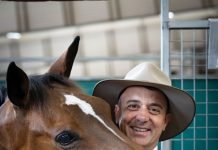
Dr Tom Quilty may have his work cut out for him working in one of the world’s most remote vet clinics, but still he says the rewards far outweigh the challenges. By Lynne Testoni
Dr Tom Quilty spends his days much like many other veterinarians who work in general practice do—treating dogs and cats, doing vaccinations, chatting with pet owners, performing minor surgeries. The only difference is that at the close of business, he’s required to travel 300km in order to front up for work at his other clinic the following day.
The most isolated vet in Australia—and possibly the world—Dr Quilty splits his time between two WA mining towns, Tom Price and Newman. Originally from the NSW Central Coast, Dr Quilty spent five years working at a local vet practice when he finished university before heading off to travel around Australia and work as a locum. He eventually fetched up in WA’s far north and hasn’t left, partly because of COVID.
“After working for five years in a mixed practice, it just got time for a change,” he explains. “I decided to pack up my four-wheel drive campervan and travel around Australia. That was in April 2020. I made it all the way across the Nullarbor and into Western Australia in time. When I got a role in the Pilbara, I thought, ‘Well, it’s a pretty safe space with beautiful scenery. I’ll try this one out for a while’.”
Dr Quilty is the only vet servicing three different towns about 300km apart and 1600km north of Perth, so the clinical practice is varied, but isolating.
“You have to do everything out here,” he says. “While it’s mostly domestic animals—dogs and cats—from people living in town, there are a couple of pony clubs out here, so horse work is regular, and then basically anything else that comes through the door. It’s you or nothing, so there’s also a lot of wildlife. We take in and rescue a lot of joeys, plus treat the occasional camel and some goats. I haven’t worked much with camels in my life, but I’ve had to deal with a few out here.”
He says he enjoys the variety offered in the clinics.
In most vet clinics you do your shift, and you can pass on your case. Or if something is beyond your expertise or beyond your knowledge you can pass it to a specialist or to someone better suited. Up here, you have to take on everything that comes through the door.
Dr Tom Quilty, remote WA vet
“If you’re in the one clinic all day long, seven days a week, it does get a bit boring,” he adds. “Having a change of scenery is good, although 600 kilometres a week between the two towns does add up.”
He also admits it can be isolating working on his own so much. He has one veterinary nurse/receptionist in Tom Price, but currently no additional staff in Newman, although they are trying to recruit.
“The lack of support is probably the hardest thing out here,” he says. “In most vet clinics you do your shift, and you can pass on your case. Or if something is beyond your expertise or beyond your knowledge you can pass it to a specialist or to someone better suited. Up here, you have to take on everything that comes through the door.
“That is the biggest thing that I struggle with—just not having that network around me or other vets for certain procedures or cases that I get.”
Dr Quilty says that online networks and the ever-growing number of online training opportunities help him keep up to date with veterinary treatments, but he misses face-to-face interaction with his peers.
WA AVA Division president-elect, Dr Katie Kreutz, says that isolation is an issue for many vets in rural and remote areas of the state, along with the challenge of recruiting and retaining staff.
People just don’t want to work in some of these areas. It’s not because the practice itself is bad, but the area to live in is undesirable. There is really a state and national shortage of vets.
Dr Katie Kreutz, president-elect, WA AVA Division
She works for a large practice located in Esperance, about eight hours south of Perth, where there are enough staff to support each other.
“We are the only vet clinic for 400 kilometres in every direction, where we’re not bordered by water. And there’s 11 of us on staff, which is good. We’re very lucky that we don’t have recruitment issues.
“I think that our practice model here is to almost be on the brink of being overstaffed, so that everyone can take their holidays when they’re supposed to. No-one feels guilty about having a sick day. Everyone teaches the new grads, but also teaches each other. There’s a lot of support here. And we’re not getting burnt out or all at each other’s throats, because we’re all happy to come to work every day, and know that it’s a safe space to be in.
“My clinic is well-staffed, but some of the practices that are more remote, such as those a couple of hours away from us, are suffering significant staff shortages. They’ve only got maybe one vet on staff in large towns, which is scary for them.
“People just don’t want to work in some of these areas. It’s not because the practice itself is bad, but the area to live in is undesirable. There is really a state and national shortage of vets.”
As for Dr Quilty—he is staying in Tom Price, for now.
“It’s a small place and everyone is a miner or big industry worker, so it’s not the same sort of demographic that I’m used to hanging out with,” he says. “At the same time, the people here are probably what’s kept me here so long. They are just salt-of-the-earth people. I’ve definitely made some good friends—lifelong friends—that’s for sure.”