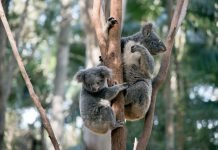
A prototype artificial intelligence-powered camera incorporated into an intelligent road sign has successfully detected and recorded a koala crossing a road in real-time on the Redlands Coast, QLD, marking the first time this technology has been proven in the field.
This development expands on previous research led by Griffith University that built an AI-powered database to detect and record koalas at various high-use transport crossings, and confirms intelligent detection systems can play a critical role in preventing wildlife-vehicle collisions and saving lives.
The trial, led by researchers from Griffith’s School of Information and Communication Technology in partnership with the NSW Department of Climate Change, Energy, the Environment and Water; Telstra and Redland City Council, was part of a broader initiative funded under the NSW Koala Strategy to reduce koala road fatalities and support population recovery.
This footage in 2022 was captured by AI-powered cameras developed by the Griffith research team, adding to the team’s database for training the technology to be deployed in the real-time road sign detection project.

Griffith University had been trialling the system on the Redlands Coast since March 2025. Using cutting-edge computing and real-time video analysis, the technology demonstrated it could detect koalas in real time as they approached or crossed a road.
This successful detection lays the groundwork for future systems that could trigger roadside warning signs and improve driver responsiveness.
“The successful detection of a koala proves the concept works,” Professor Jun Zhou said.
“With further investment, this pilot can be expanded into a scalable solution that protects more wildlife and improves public safety across high-risk corridors.
“This is more than a tech milestone; it’s a turning point. We now have the ability to intervene before tragedy strikes. Expanding this system could be a game changer for koala conservation and road safety.”