Estimated reading time: 7 minutes

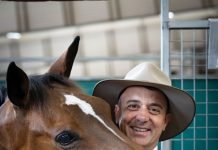
Dr Alisa Wallace didn’t let 12-hour road trips, stormy seas or the tyranny of distance stop her from following her calling. As a senior vet at Taronga Western Plains Zoo in Dubbo, Dr Wallace is living her dream every day. By Shane Conroy
Dr Alisa Wallace found her passion for wildlife in the lush highlands of Papua New Guinea. She was around six years old when her family moved to the tropical island nation, and she soon became known as the local wildlife whisperer.
“I’d bring home any little animal that needed help,” she laughs. “All the local kids knew that I liked looking after animals, so they’d bring me any little injured birds they’d find. Caring for wildlife just seemed to call to me.”
Now a senior vet at Taronga Western Plains Zoo in Dubbo, Dr Wallace is living the dream—except on the rare occasions it becomes a nightmare.
“Working as a zoo vet is absolutely my dream come true, but it’s an adventure too,” she says. “I remember escorting a giraffe to Auckland aboard a cargo ship when an unexpected storm hit. It was terrifying. I was incredibly seasick and even the experienced crew of sailors was sick. I remember thinking, ‘Well, they sure don’t teach this at university’.”
Dr Wallace graduated from Sydney University in 2007. There was no veterinary degree dedicated to wildlife, and she needed to find her own pathway into the small zoo vet community.

“In my final year at university I chose to do some placements at zoos and with wildlife vets. All the advice I was getting was to get a few years of general practice experience at a large animal practice. It’s a great way to develop your core clinical skills and learn how to practise in the field.”
The ultimate GP
Dr Wallace began learning her trade at a mixed animal practice in Murray Bridge, South Australia, before taking her first big step towards becoming a zoo vet. It’s an inspiring lesson in dedication.
“In 2011 I was very lucky to get a job as a casual vet at Taronga Western Plains Zoo. I continued to work for the Murray Bridge practice, and Western Plains would call me in when someone was away,” she says. “The only problem was that it was about 12 hours down the road. But I’d jump in the car and make the drive whenever they called. If I had thought 12 hours was too much hassle, I wouldn’t have had the opportunities that I’ve had. You’ve got to throw your hat into the ring and see what happens.”
The new wildlife hospital is a game changer for us. We have a new operating theatre with an equine surgery table, and a lot more animal holding space designed and dedicated to different species. A zebra would be the largest animal we’d bring into the hospital, so we do a lot of field procedures too.
Dr Alisa Wallace, senior vet, Taronga Western Plains Zoo
A full-time, six-month maternity leave contract at Western Plains opened up. Dr Wallace was delighted. She left Murray Bridge to embrace the busy day-to-day life of a zoo vet.
“I had a blast,” she says. “There are lots of different aspects to looking after animal health in a zoo, and I love that variety. We’re involved with animal nutrition, transport logistics and quarantine, and we do a lot of preventative healthcare like vaccination programs for different species, worming and dental checks. Then of course there’s surgery, and we do a lot of in-the-field care at Western Plains too.”
After her contract ended, Dr Wallace took up a three-year residency at Perth Zoo. She says it was essentially a traineeship in zoo and wildlife medicine, and gave her the opportunity to build on the skills she had learned in mixed animal practice at Murray Bridge and during her time at Western Plains.
“I still draw on all of that experience today. I think of zoo vets as the ultimate GPs because we’re covering so many different species,” she says. “Every time I pull a calf out of a giraffe, I’m so glad I did it so many times on cows.”
Dr Wallace was fast to act on an opportunity to return to Western Plains in 2021 in her current role as senior vet. She says she had always wanted to come back to the zoo she started at. “In the zoo vet world there are not a lot of jobs, and those who have them tend to stay there until they retire. That’s why I didn’t hesitate when there was an opportunity to come back here.”
To preserve and protect
Dr Wallace’s return to Western Plains coincides with the opening of a brand new $14.6 million wildlife hospital at the zoo. The purpose-built facility increases the zoo’s capacity to treat and rehabilitate native wildlife, improves its ability to act as first responders in emergencies, and enables it to play a pivotal role in conservation programs for critically endangered species.
It is the only dedicated wildlife hospital west of the Blue Mountains and—in addition to providing state-of-the-art care for the zoo’s resident species—is essential for the care and rehabilitation of the region’s injured native animals.
“The new wildlife hospital is a game changer for us,” Dr Wallace says. “We have a new operating theatre with an equine surgery table, and a lot more animal holding space designed and dedicated to different species. A zebra would be the largest animal we’d bring into the hospital, so we do a lot of field procedures too. We have a field room in the new facility that’s basically the hospital in boxes we can throw onto the back of the ute.”
In the zoo vet world there are not a lot of jobs, and those who have them tend to stay there until they retire. That’s why I didn’t hesitate when there was an opportunity to come back here.
Dr Alisa Wallace, senior vet, Taronga Western Plains Zoo
The zoo’s more than 300,000 annual visitors can also now observe all the action that happens in the new wildlife hospital via a series of public viewing areas. The hospital also boasts a consultation room with an incubator where wildlife carers or members of the public can bring injured wildlife for treatment, an enclosed flight tunnel to rehabilitate birds of prey, and an endocrine laboratory.
“The lab is a particularly interesting aspect of the new facility,” Dr Wallace explains. “We have a CryoDiversity bank where we collect and store sperm and egg samples from a wide range of species.”
While the zoo isn’t quite ready to replicate Jurassic Park, Dr Wallace says the CryoDiversity bank could be critical for preserving species into the future.

“Technology is constantly evolving, and while we’re not looking at resurrecting extinct species, we are looking at preserving DNA to help increase genetic diversity in threatened populations.”
Inspiring the next generation
Dr Wallace says being part of Australia’s small but tight-knit zoo vet community is also a benefit of the job. She explains that while job opportunities may be in short supply, the zoo vet community is generally welcoming of young vets who display an interest in caring for wildlife.
“It’s a small community so we all know each other, and often share expertise and advice between ourselves,” she says. “Young vets shouldn’t be afraid to show their interest, attend conferences and seek out volunteering opportunities. That’s how you become part of the zoo vet community, and put yourself at front-of-mind when an employment opportunity comes up.”
Dr Wallace also says that while young vets are often warned of the limited opportunities available to become a zoo vet, it’s certainly not impossible.
“It is an expanding field with more and more jobs available, so stick at it and don’t get discouraged,” she concludes. “There are quite a few zoo residency programs out there now that provide more structured learning and mentoring, and there’s plenty of wildlife work at general vet practices. When I finished uni, people said to me that I’d never get a paid job as a zoo vet. I’m so glad I didn’t listen to them.”