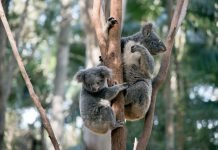
South Australia is home to a booming koala population, but researchers warn that this apparent conservation success could eventually turn into a serious problem.
A new study by a team at the University of Technology Sydney and involving scientists from Flinders University and the University of Wollongong has provided the first comprehensive estimate of koala numbers in the region and identified a humane, cost-effective strategy to keep the population at sustainable levels.
The study—published in Ecology and Evolution—estimates that the koala population in South Australia’s Mount Lofty Ranges now accounts for about 10 per cent of all koalas in Australia. While that may sound like positive news, researchers say the population has already reached levels that could threaten its long-term survival.
According to the team’s projections, the population could increase by another 17 to 25 per cent over the next 25 years if no action is taken. Continued growth could place increasing pressure on food resources, native vegetation, and the broader ecosystem.
To better understand the situation, researchers combined advanced spatial modelling with thousands of citizen science observations. Their analysis showed that koala densities in many parts of the Mount Lofty Ranges already exceed sustainable levels.
The findings highlight a difficult challenge for conservation managers. Traditional approaches such as culling and relocation are often controversial or considered unsuitable for a species that holds a special place in Australia’s wildlife heritage.
“How do we manage a species that is now threatened by its own abundance and do so in a way that protects both animal welfare and long-term ecosystem health?” study co-author Dr Katharina Peters said.
The researchers evaluated several population management options using computer simulations. Their results suggest that a targeted fertility control program could effectively stabilise koala numbers.
The most effective strategy involved sterilising about 22 per cent of adult female koalas each year in areas with the highest population densities rather than applying the approach across the entire region. The team estimates the program would cost approximately $34 million over a 25-year period.
“The novelty lies in the proactivity of the approach: instead of spending money on a conservation plan without knowing whether it will succeed, we use computer simulations to identify in advance which strategies are most likely to work—optimising both costs and taxpayer investment,” research lead Dr Frédérik Saltré said.