

Estimated reading time: 7 minutes

Managing wild horse populations in national parks is a divisive topic, often pitting environmentalists against brumby advocates. But as equine welfare veterinarian Dr Andrea Harvey discovered, the debate often overlooks the welfare of the horses.
By Frank Leggett
It’s estimated that there are one million wild horses in Australia but in Kosciuszko National Park, the plight of wild brumbies often leads to the most passionate disagreements. Some people see the horses as part of the culture and history of the area. Others would like to see these feral animals completely removed from the fragile alpine environment. Even the population of horses in this area is contentious. Some community members strongly disagree with the results of scientific population estimates that were commissioned by the NSW Department of Planning and Environment.
While the arguments for and against wild horses include environmental impact, tourism opportunities, land degradation, cultural significance, historical aspects, and animal rights, what’s little considered is the welfare of the brumbies.
“For people on the extreme sides of the argument, it’s often not really about the horses,” says Dr Andrea Harvey, an independent veterinarian and founder of a brumby sanctuary in the Southern Tablelands of NSW. “It’s about different groups of people wanting to get their own way. Some people don’t want the horses managed at all. They don’t want them removed from the park. They don’t want people homing them. They want them left completely alone. And they tend to use the words, ‘wild and free’—but is that really the best outcome for the horses? As an animal welfare veterinarian, I wanted to find out more about the welfare of these free-roaming horses.”
The Kosciuszko National Park brumbies are one of the most well-known wild horse populations in Australia, due largely to their The Man From Snowy River connection. In 2018, the Kosciuszko Wild Horse Heritage Act was passed in parliament, becoming the first law to recognise the heritage value of an introduced species in Australia.
Cats and horses
Born and raised on Britain’s Channel Islands, Dr Harvey grew up around horses and set her heart on becoming a vet at age 14 when helping nurse her injured pony back to health. Graduating from the University of Bristol in 2000, and seeing a need for improved knowledge of cats, she went on to become an RCVS Specialist in Feline Medicine and European Specialist in Veterinary Internal Medicine in 2005. Dr Harvey moved to the Southern Highlands of NSW in 2011 to live on her partner’s farm. It was here that she was first introduced to Australia’s wild horses after adopting three young brumbies from Guy Fawkes National Park.
The welfare question
When Dr Harvey undertook a PhD investigating the ecology and welfare of wild brumbies, she discovered that there had never been any scientific welfare assessments of free-roaming wild animals. Her first task was to create a framework and rigorous methodology that would obtain scientifically reliable results. She utilised the well-established Five Domains Model for assessing welfare.
“The model is based on four physical/functional domains, and a fifth domain of mental experience,” she explains. “Measurable/observable indicators in the domains of nutrition, physical environment, health and behavioural interactions are used to cautiously infer the animals’ mental experiences in the fifth domain.”
Next, she needed to establish methods for visualising wild horses across different habitats and determining which welfare indicators could be measured and observed.
Management needed
Dr Harvey utilised remote sensing camera traps across a range of habitats, including open plains and woodlands. She found that generally, in times of favourable rainfall and optimal grass growth, horses on open grasslands had good welfare. They were in large herds, the mares were producing foals, the horses had good body condition, and they were often seen exhibiting positive social behaviours. Observed over a 15-month period, the welfare of these horses rapidly declined during a dry period, with horses becoming emaciated and slowly starving to death.
“The story was worse in bushland areas where there’s rarely much vegetation suitable for horses to eat,” says Dr Harvey. “In these habitats, horses were often just in twos and threes, sometimes alone, usually with very poor body condition. They had low reproductive rates and few positive social behaviours were observed. They appeared to spend most of their time walking longer distances, presumably in search of food.”
Some people don’t want the horses managed at all. They don’t want them removed from the park. They don’t want people homing them. They want them left completely alone. And they tend to use the words, ‘wild and free’—but is that really the best outcome for the horses?
Dr Andrea Harvey
The general public isn’t aware of horses that have poor welfare because they’re not easily seen in vast areas of dense bushland. Dr Harvey says, “I never directly observed most of the horses with the poorest welfare. I only picked them up on camera traps.”
The only factor that naturally limits population is food availability, which means large numbers of horses have inadequate food for variable periods of time “It’s clear that wild horse populations need to be managed if we’re to reduce the negative welfare impacts,” says Dr Harvey. “The ideological ‘wild and free’ lifestyle simply leads to a constant cycle of horses being undernourished and starving.”
When searching for food becomes the horses’ priority, this impacts on other aspects of their life. Social groups break up and there are few indications of any positive experiences.
Reducing population growth
Simply removing horses from the population creates a continuous cycle as the populations often grow more quickly than the horses can be removed. Ideally, a way of reducing population growth is needed. Dr Harvey has been exploring the use of immuno-contraceptives, administered by dart gun in some other countries. Unfortunately, the Kosciuszko brumbies present some challenges to the technique.
“You need to be within 20 to 40 metres of a horse with a clear line of sight to be able to dart them,” says Dr Harvey. “When I was undertaking my research, I evaluated the flight distance of the brumbies. This could be as far as 300 metres. Usually, I would observe them with binoculars from about 500 metres away. If we approached any closer, they usually ran away.”
Most immuno-contraceptives only last about one year, which means annual repeats of the injections. This is simply not feasible in large populations of horses, especially when they can’t be approached close enough to administer a dart.
Trap and rehome
Dr Harvey is working with a range of rehoming organisations that take in horses and find them domestic homes. The stallions can be particularly problematic as they need gelding, and this is difficult in an unhandled mature stallion. Dr Harvey has gelded more than 100 stallions pro bono for rehoming organisations as well as rehomed wild horses onto her own property. Her aim is to provide a sanctuary that maintains as much of their natural lifestyle as possible while mitigating the negative welfare impacts that a natural life can bring.
“I handle them, do routine parasite control, treat any health problems that arise, feed when they need extra feed, and trim their feet as required,” says Dr Harvey. “I have three different groups on 100 to 200-acre plots. Each herd is between 10 and 20 horses, just as it is in the wild. They’re able to perform all normal horse behaviours while benefiting from extra food and veterinary care.”
While horses in the wild still need to be culled, Dr Harvey continues to look for longer term solutions and is exploring other methods of reproductive control. The science is clear that management is needed and that wild brumbies cause negative impacts on the environment and native species. However, as Dr Harvey says, “This doesn’t mean the solution is open slather killing, shooting every horse.”
Perhaps her greatest success was being part of the NSW government Kosciuszko wild horse management scientific advisory panel that advised on best practice.
“We definitely made a difference in the way the management plan is being implemented,” she says. “The focus has been successfully moved to ensure welfare outcomes of the horses are optimised.”

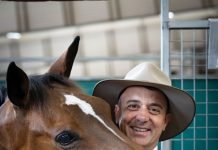

Dr Andrea Harvey ,
I for one am interested in why we cannot find areas around the world for these so called excess horse numbers to be catered for.
If we can show humanity there is a way to keep all parties feeling Common sense is prevailing and our sense of the world becoming a better more satisfying world to WANT to be a part of as our spirits are comforted then all live better together.
We ship millions of things around the world for endless reasons, war , nature disasters, praying money does not win the debate again, let’s find somewhere for these beautiful animals to LIVE, or that would be a natural disaster.
So many people angry at each other and causing pain instead of working together for a solution for all, especially the horses.
Then when all sides see a life outcome prevail instead of death, ( which all should agree must be the last option) we then Drink together in the victory.
There’s also the valid question as to whether the horses do have a detrimental effect on the environment! Look at the scientific studies on YouTube and on here which show that human beings have caused afar more damaging and long lasting effect with their man made walking platforms, their vehicles, etc the number of horses ever have had!